

“Montmartre is dead!” screamed the headline of a February 1924 obituary in The Living Age, an American weekly review.
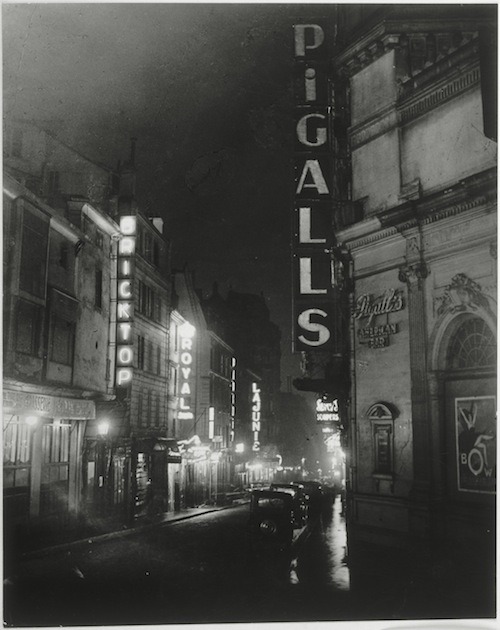
The famed artists’ redoubt on a hill at the northern border of Paris had succumbed to an influx of American money and values. The penniless French artists and poets who had once gathered round the tables of the Lapin Agile were being usurped by “the most elegant women and most lavish money-spenders” who clustered in the nightclubs around the Place Pigalle, at the district’s southern edge, popping champagne corks all night. These nightclubs, complained a 1925 French guide book, “are becoming more and more Americanised and are thereby steadily losing their individual character.” Look closely at the image below of Pigall’s, photographed in 1930, and you will see the words “American Bar” posted prominently at eye-level.
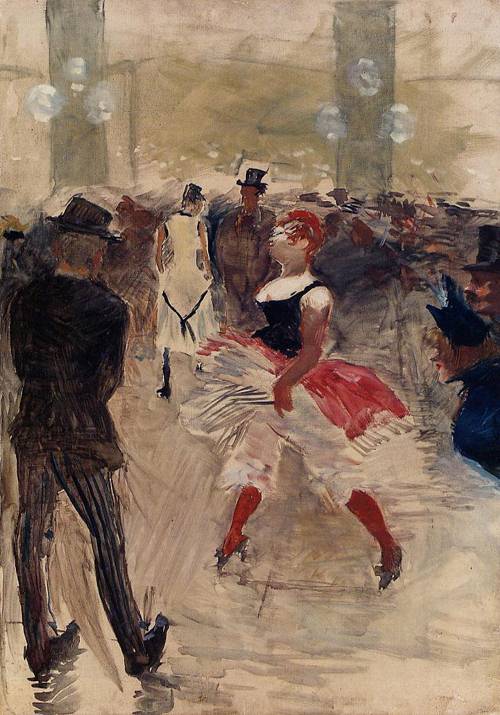
Of course maybe there’s some irony in the fact that one of the best known images of Montmartre before its “decline” in the 1920s was created not by a native French montmartrais, but by the Spaniard Pablo Picasso, who had his studio in the quartier at the turn of the century.

To George Moore, the Irish novelist and painter whose fictionalized 1886 memoir Confessions of a Young Man helped to inaugurate the end of Victorian letters, Picasso was an arriviste. Moore studied painting in Paris during the 1870s, the heyday of impressionism. During the nights, he partied at the Élysée Montmartre, the birthplace of the can-can, just up the road from Place Pigalle, where he revelled in the “clangour of the band, the unreal greenness of the foliage, the thronging of the dancers, and the chattering of women, whose Christian names we only knew.”
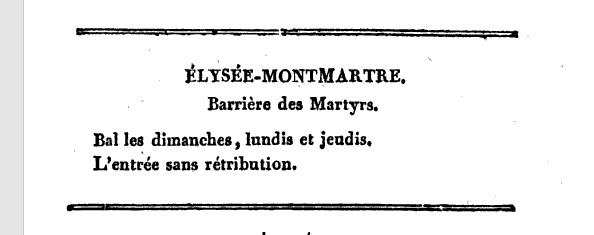
Moore thought he had it good, but the old guard who could remember the Élysée Montmartre when it first opened, in 1807, may have pitied the party-goers of the late nineteenth century. Back in their day, the venue had been free! You had to pay for dancing and refreshments, but admission was open to all. Galignani’s New Paris Guide of 1830 recommended the Élysée Montmartre to visitors, as well as the Hermitage, a guingette (dancehall) at the top of Montmartre.
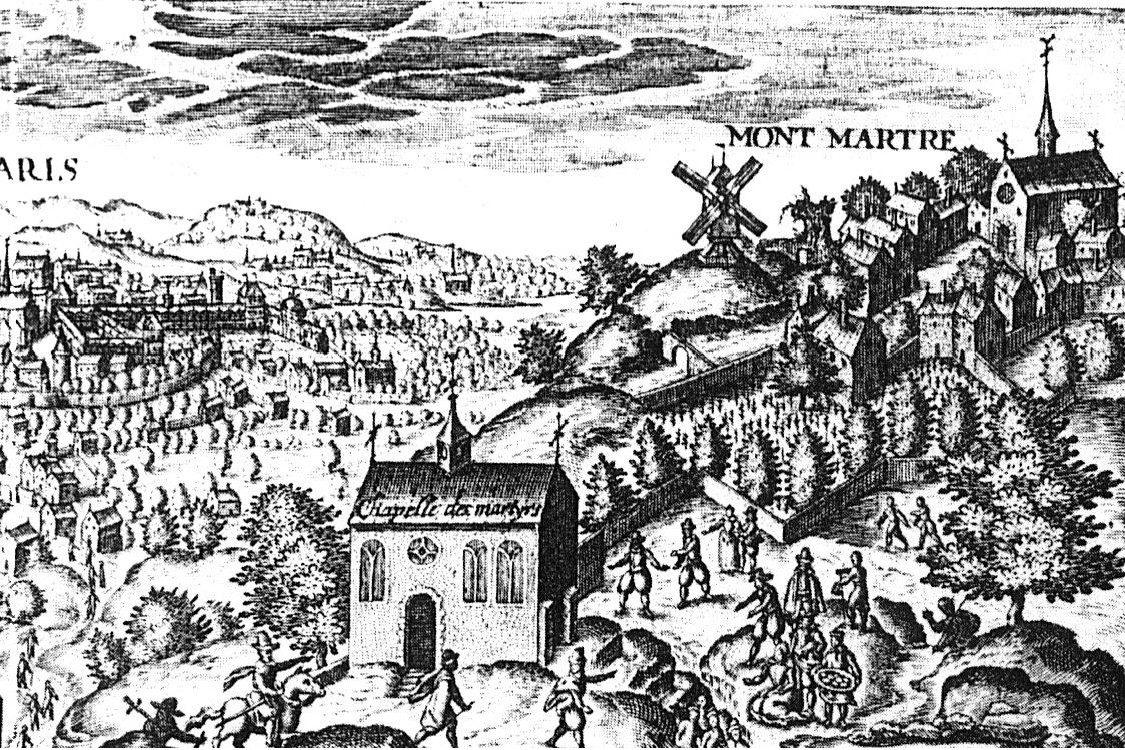
For their part, the nuns of the Montmartre abbey probably longed for the old days before the French Revolution, when a very different hermitage had commanded Montmartre’s heights, and music in the quarter came from the voices lifted to God within their chapel walls. Here Charpentier’s petit motet for the feast of Ste. Geneviève may have been performed for the first time in 1677.
Geneviève, the patron saint of Paris, who lived in the city back in the fifth century when it still went by the name Lutetia, could remember the good old days of Roman rulership, before Clovis’s father Childeric seized the city for the Franks. The jury is still out on the question of who lived at the site of Lutetia before the Roman era.

All of which is to say that the recent hard-hitting New York Times editorial titled “How Hipsters Ruined Paris” was written by someone with a very short historical imagination. Thomas Chatterton Williams, who moved to Place Pigalle from Brooklyn in 2011, reports hearing the final bell tolling for the quartier as several of the sex shops around Place Pigalle have recently given way to cafés that serve decent coffee and restaurants dishing up kale. God forbid. How dare a new generation identify a genuine need in Paris (where much of the coffee is shitty and dark leafy greens are rare) and attempt to fill it while also creating popular spaces for people to gather? Williams’s editorial has gotten much attention, in the way that obviously wrong-headed writings frequently do. It appeared in my inbox several times, forwarded by well-meaning friends and family.
I think a little bit of history is all that is required to illustrate the silliness of Williams’s claim. But I’d like to close with a maneuver that the professional historian can rarely get away with, unless she happens to be writing a blog; in other words, I’d like to make a prediction. One hundred years from now, in an electronic publication of some variety, someone will make the startling announcement that Montmartre, for real this time, is dead!
For samples of other responses to Williams’ editorial see:
The “Destroyer’s Guide to Ravishing Paris” by the website “Paris by Mouth” telling you which new cafés and bars to patronize in the Pigalle area
“Trapped in Amber Alert” a critique of Williams’s romanticization of the sex work around Pigalle. (I wrote a comment on this post, noting some of the real problems of gentrification and affordability that Williams could have discussed.)
“For Whom the Kale Tolls” In defense of youth and against the label hipster.
See also Brooke Blower’s Becoming Americans in Paris for an account of the blowback against the Americanization of Montmartre in the 1920s.


 Historian. Novelist. Greedy Woman.
Leave a comment