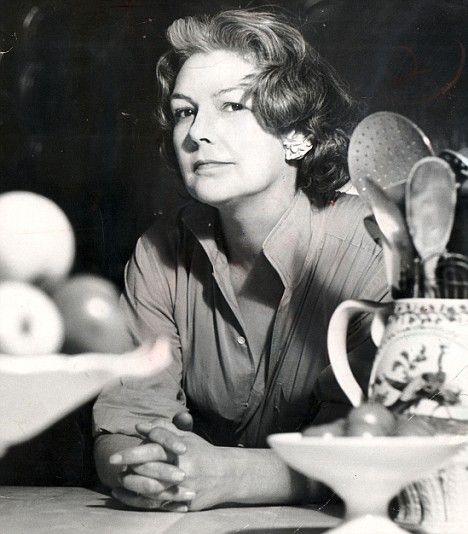
When Elizabeth David came home to Britain in 1946, after spending the war years in Egypt, her agonies from the the flavorless diet she rediscovered drove her to write a cookbook recollecting all the wonderful things she had eaten during her absence. Britain was at the height of postwar rationing and gristle rissoles were on the menu, along with flour and water soup, dehydrated carrots and onions, and corned beef toad-in-the-hole. Like a pilgrim in the desert who conjures visions of a watery oasis, David used her pen to resurrect the flavors of lemons, olives, apricots, and almonds, so absent from her meals.
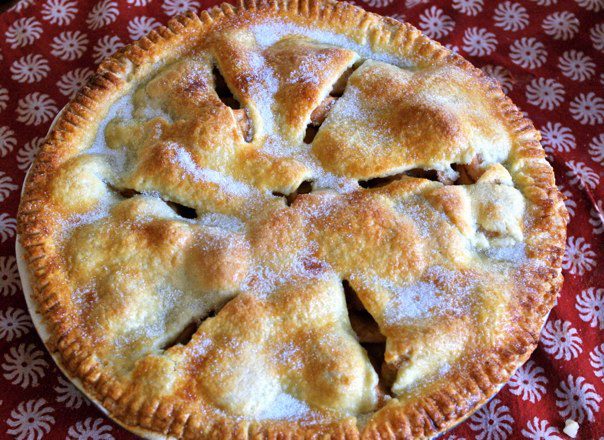
Coming home to Victoria has tasted a whole lot better. There were foods from home we longed for during our year in Paris, but either couldn’t or wouldn’t buy abroad. We’ve been feasting on wild salmon the past few weeks, simply baked with salt and pepper, flaked over homemade bread and butter, or atop a toasted everything bagel from our local Montreal-style bagel shop, with quick-pickled red onions, capers, and slivers of lemons. We’ve been eating Tim’s homemade corn tortillas, so unlike the stiff and dry yellow discs sold in Paris. The other night, at a friend’s house in San Juan island, we ate tortillas from a Washington-state tortilleria, stuffed with local prawns, caught by her family, that were flash-fried with a little garlic and lime until they were just cooked but still soft and bursting with juice. We washed down our shrimp tacos with a Washington State microbrew, and then finished the evening with a gin-and-tonic, gin made by an Olympic-peninsula distillery. We’ve been grazing on raspberries from our friends’ gardens, on wild Himalayan blackberries just ripening along the side of the road, and on the plums which are starting to fall from the city’s trees onto the streets all around our house.
Which is not to say that we haven’t been experiencing loss as well. The other day I bought a camembert-style cheese from a local island cheese-maker, which I’ve always loved in the past, but now it seemed rubbery and tasteless. Has the local cheese gone downhill or have my tastes changed after a year of raw-milk stinky runny cheeses in Paris? And I have sniffled more than a little over the bread. Bakers from the fourteenth arrondissement, where we spent our year, have snagged the annual “best baguette in Paris” award for the last two years running, and the place on our corner came in the top 10. Victoria has one wonderful bakery on the other side of town, and several places that are good enough, but it’s a very good thing Tim bakes.
–
One thing I haven’t been missing are Paris’s bistros. The New York Times‘ Mark Bittman has an article today titled “French Food Goes Down” bemoaning the rise of the pre-cooked, frozen, mass-produced meals now served up in the nation’s bistros, in place of the old locally-sourced cuisine bonne femme of yesteryear. Sad to say, that was our experience in Paris. We had a few exceptional meals (like our bank-breaking blowout at Spring), as well as some terrific quick food (bahn mi in the 13th, falafel on rue des rosiers, sandwiches from Verjus at the Palais Royal), but our meals in the city’s bistros were forgettable, at best. After our first couple months we more or less gave up on that strata of restaurant.
Bittman wonders if the French cooking of his first visit to the country, forty-five years back, was truly better or if he was just less discerning then. I wish I could hop in a time machine with him to find out the answer. To hear Julia Child tell it, the food was still swoon-worthy in the fifties. But Elizabeth David saw a sharp decline in quality during the late sixties. “It is not, heaven forbid, that one expects a Gastronomic Experience at every meal – although guide books do rather tend to overdo the promises – but simply that one hopes for honest raw materials, honestly cooked at honest prices,” she complained. Bittman and I are singing an old tune.

Like Elizabeth David, I found the true joy of French food not at the restaurant table, but in the market. A series of essays that she wrote for Vogue in 1960 on the “Markets of France” have a timeless quality. At her best, David’s writing echoes Zola’s descriptions from Le Ventre de Paris, his novel about the old Les Halles market. At the same time, her account of the typical offerings sold by marketplace charcutières in 1960 could have been written just as easily about the stalls at our local market every Tuesday and Friday:
“we find … trays of shining olives, black and green, large and small, pickled gherkins, capers, home-made mayonnaise, grated carrot salad, shredded celeriac in rémoulade sauce, several sorts of tomato salad, sweet-sour onions, champignons à la Grecque, ox or pig’s muzzle finely sliced and dressed with a vinaigrette sauce and fresh parsley, a salad of mussels, another of cervelas sausage; several kinds of pork pâté; sausages for grilling, sausages for boiling, sausages for hors-d’oeuvres, flat sausages called crépinettes for baking or frying, salt pork to enrich stews and soups and vegetable dishes, pigs’ trotters ready cooked and bread-crumbed, so that all you need to do is to take them home and grill them; raw ham, a galantine of tongue, cold pork and veal roasts, boned stuffed ducks and chickens…”
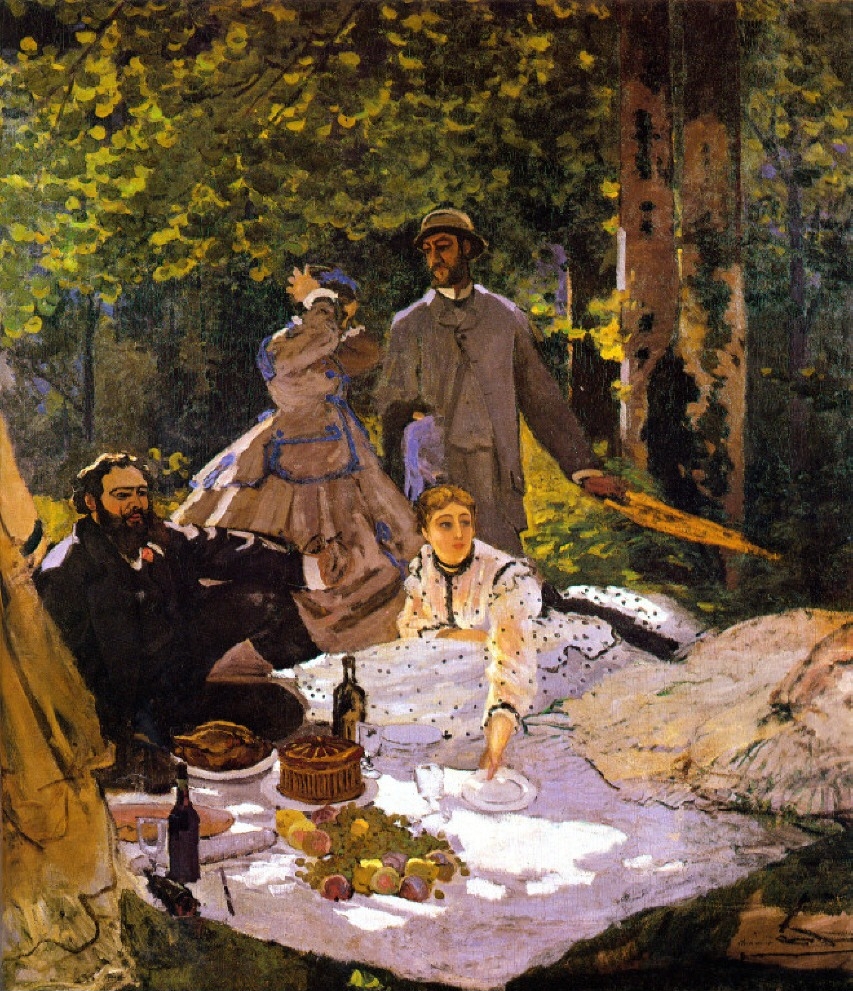
No wonder that David and I agree that “picnics in France contain so many joys.” You can make your selection from hors d’oeuvres of the sort listed above, add to that some prepared dishes from the Middle-Eastern vendors who now join the French traditionalists at the market, buy a few cheeses, baguette, fresh fruit if it’s the season (which it should be, if you’re having a picnic), and a couple bottles of wine, then spread yourself out on a blanket in one of the city parks that make Paris liveable despite its being one of the densest cities in the world. Our favourite place to picnic was Parc Montsouris, only a ten minute walk from our apartment. If we had lived in the 19th, it would have been Parc des Buttes Chaumont, in the 20th Parc Belleville, in the 8th Parc Monceau. Whatever park is local to you is bound to be the best place for a picnic, so that after you wake up from a nap en plein air you don’t have far to walk home.
–
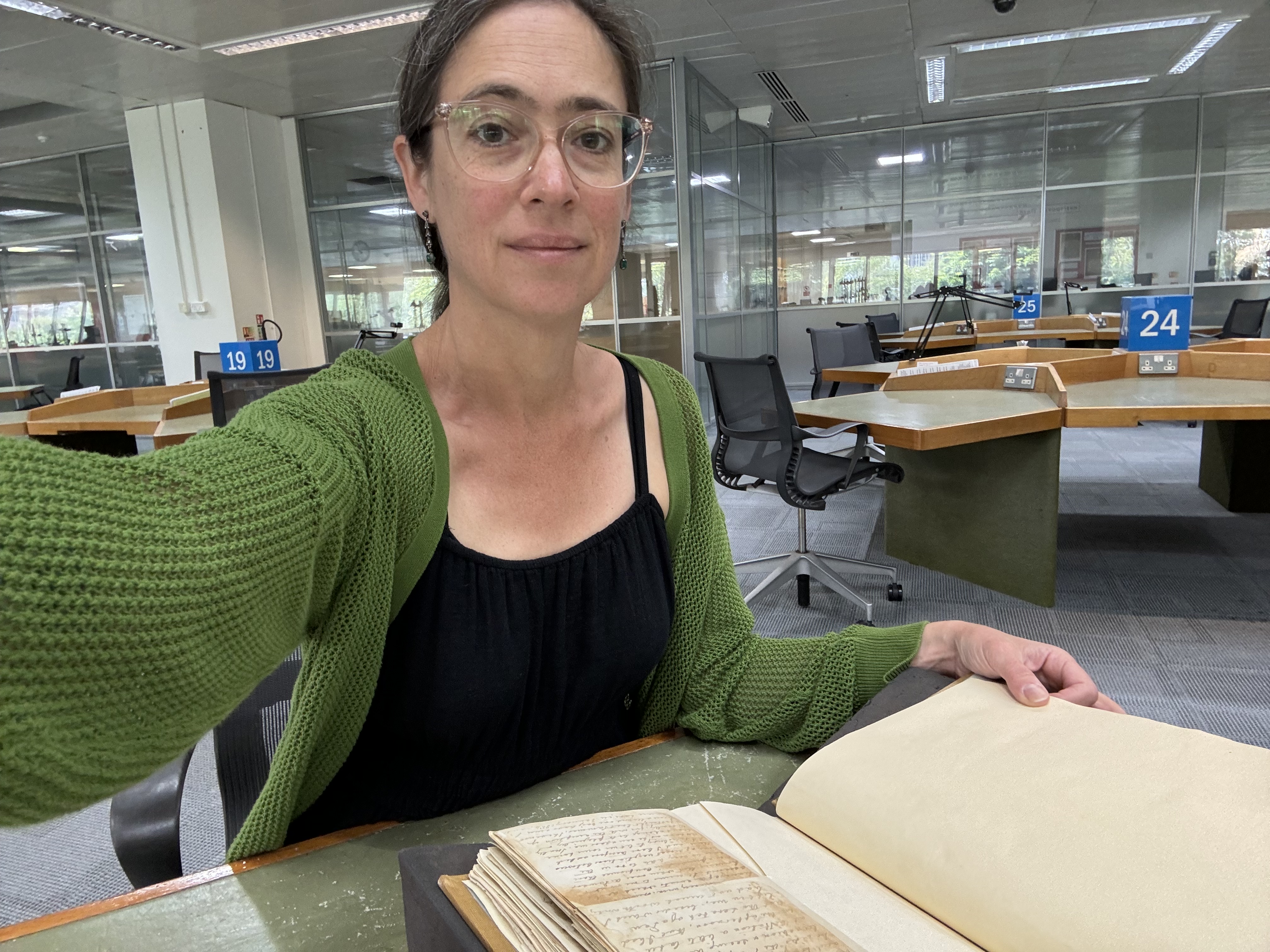
Reading up about Elizabeth David, for an upcoming research trip I’m taking to view her archives at the Schlesinger Library, I discovered that there is now an organization devoted to preserving her memory by holding an annual picnic on the third Sunday of each May (around her birthday). I think we should bring this custom to Victoria, there’s plenty of time to plan the event. There’s also an enticing new “Public Market” opened downtown where we can pick up local seafood, roasted meats, olives, chocolate, and even tortillas to share. Maybe by then I’ll have sourced some cheeses and baguettes that satisfy. The liquor laws in the province seem to be relaxing a bit, so perhaps we’ll even be able to pull a few corks and toast the joys of eating lunch in the grass. See you there!


 Historian. Novelist. Greedy Woman.
Leave a reply to Rachel Hope Cleves Cancel reply