Gertrude Stein
-
Legendary Paris Dinner Parties
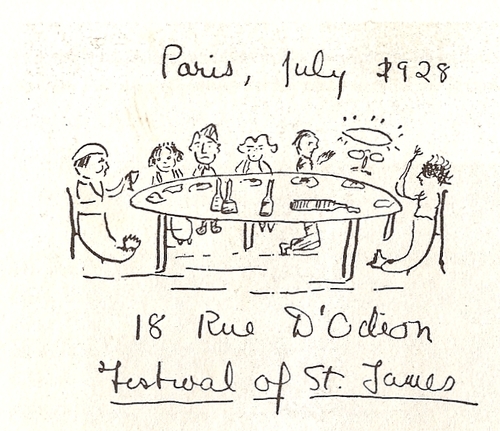
Scads of American memoirists have rhapsodized about their wonderful meals in Paris’s restaurants, but Janet Flanner, who for decades wrote a fortnightly “Letter from Paris” column for The New Yorker under the pen name Gênet, preferred to recall the dinner parties. It requires a certain longevity spent in a city before invitations to dinner begin pouring in.…
Alice B. Toklas, blanquette de veau, champagne, dinner parties, F. Scott Fitzgerald, France, French cooking, French cuisine, Gerald and Sara Murphy, Gertrude Stein, Isadora Duncan, Janet Flanner, Les Noces, lesbianism, Loie Fuller, Pablo Picasso, Paris, Paul Poiret, pelure d’oignon, Saint-Germain, Stravinsky, Tender is the Night, The New Yorker, the Seine, two buck Chuck, Zelda Fitzgerald -
Rapture for Cooking
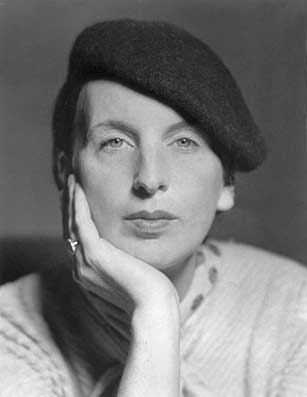
Jimmie the Barman, who poured the drinks at many of the best-known Lost Generation drinking holes including the Dingo, the Falstaff, and the Trois et As, once observed that it was “remarkable that the leaders and organizers of Montparnasse were largely women.” Poets like Mina Loy, artists like Nina Hamnett, writers like Djuna Barnes, editors…
-
There is no Ibérico or serrano, only Jamón
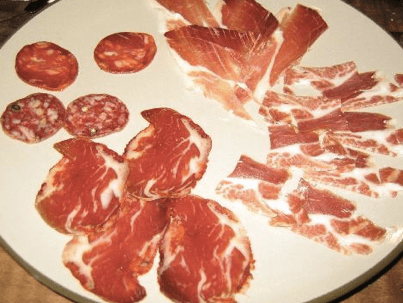
The novel most responsible for the everlasting romanticization of Jazz Age expat culture in Paris, Ernest Hemingway’s The Sun Also Rises, takes place half in Spain. When the pressures of drinking wine and eating oysters in the cafés of Montparnasse became too much to take, Hemingway, his friends, and the characters he modelled after them, escaped to San…
-

Hemingway’s Hunger
“I’m very hungry,” I said. – Ernest Hemingway, A Moveable Feast (1964) Published posthumously, Hemingway’s brief memoir of expat life in 1920s Paris is so popular that in “Harold and Kumar Escape from Guantanamo Bay,” the stoner duo meet a prostitute named “Tits Hemingway” who explains that she got her name because “I have huge…
-
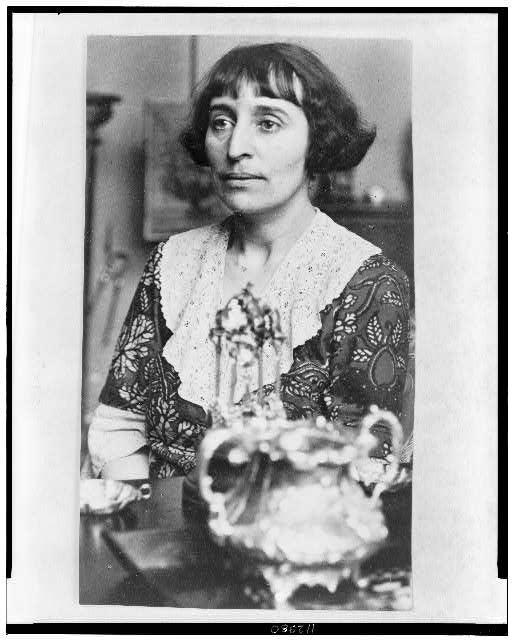
The Auto-biography of Alice B. Toklas
The charm of The Autobiography of Alice B. Toklas (1933), Gertrude Stein’s tongue-in-cheek “memoir” of her partner, lies for most readers in its intimate portrayal of Parisian artistic life during the first decades of the twentieth century. The informality of the narrative, a conversational slew of anecdotes featuring the most famous names of twentieth-century arts and letters…
-
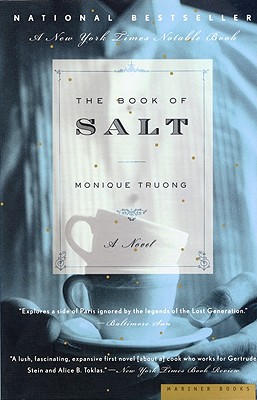
The Book of Salt
Embarking on a new reading list is, to me, a highlight of starting a new research project. It gives me an excuse to visit bookstores and libraries and collect stacks of unfamiliar books. It would be more sensible, as a scholar, to build a project on the library I have already assembled – both on my shelves…
 Historian. Novelist. Greedy Woman.